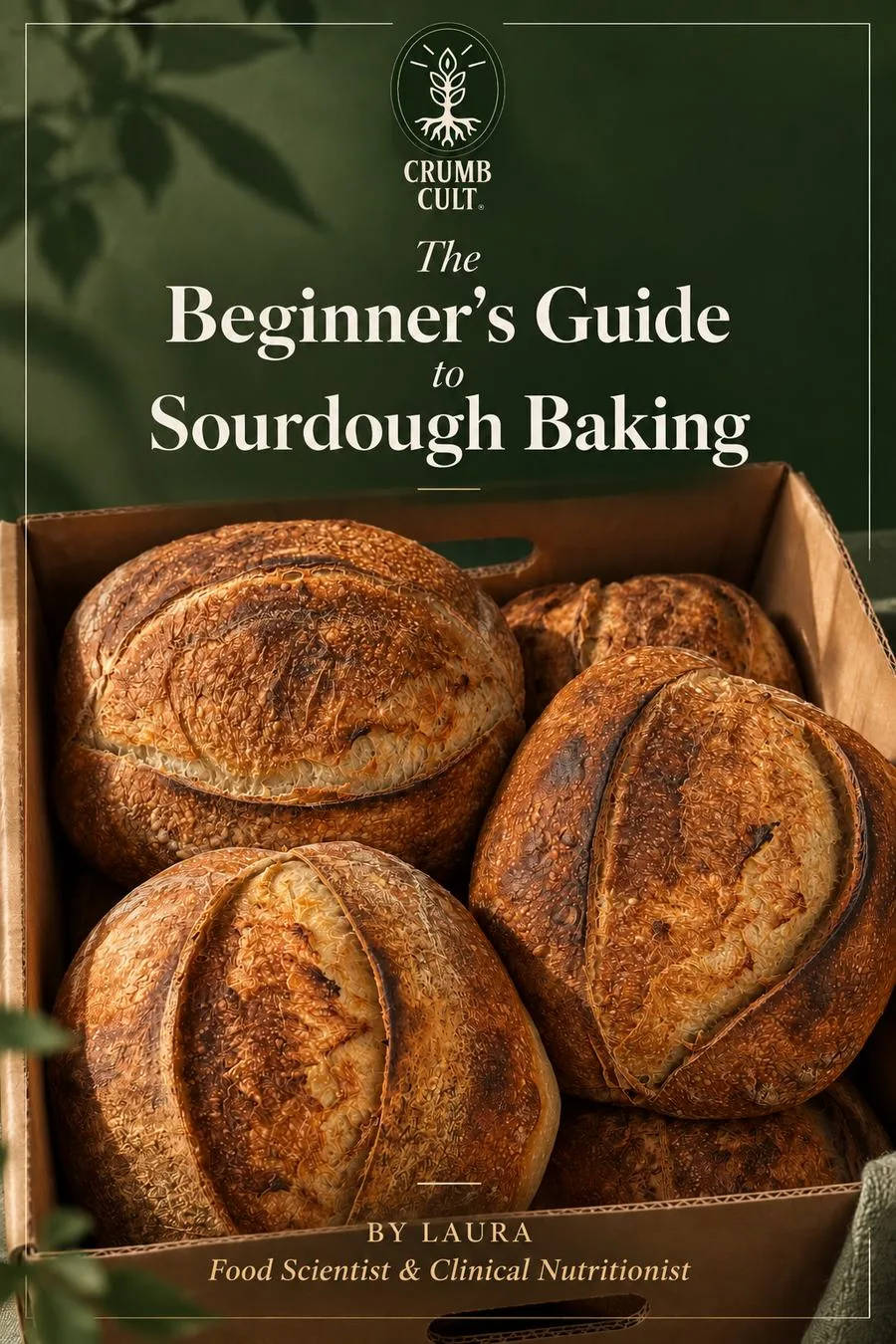
The Beginner's Guide to Sourdough Baking the CrumbCult way
Learn the art of baking tasty sourdough bread in 1 day.
Food scientist Laura Gerbasich has sold thousands of sourdough bakes this past year. Her step-by-step guide takes complete beginners from a jar of flour and water to their first proper loaf.
Sound familiar?
- Your starter bubbles for a few days, then goes flat
- Your loaf spreads out instead of rising tall
- The inside comes out dense or gummy
- The recipe's timings never match your kitchen
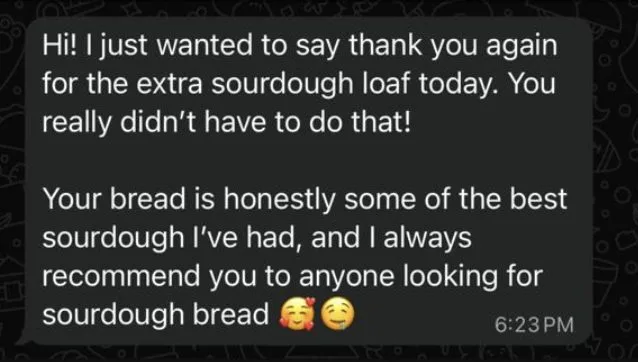
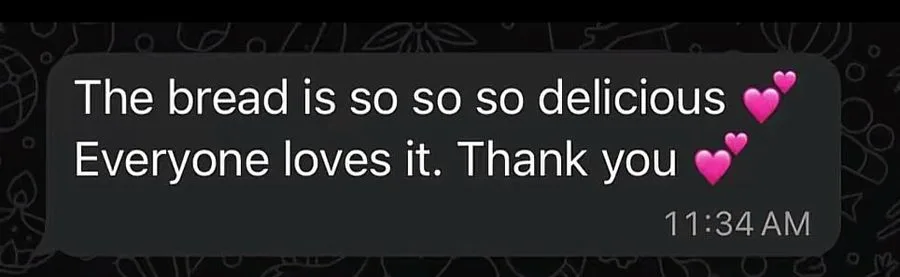
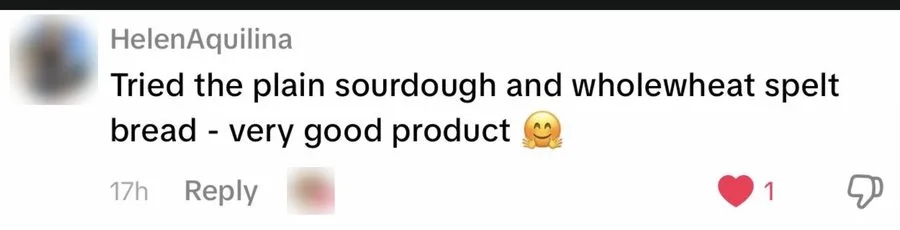
“Some of the best sourdough I’ve had.” A Crumb Cult customer
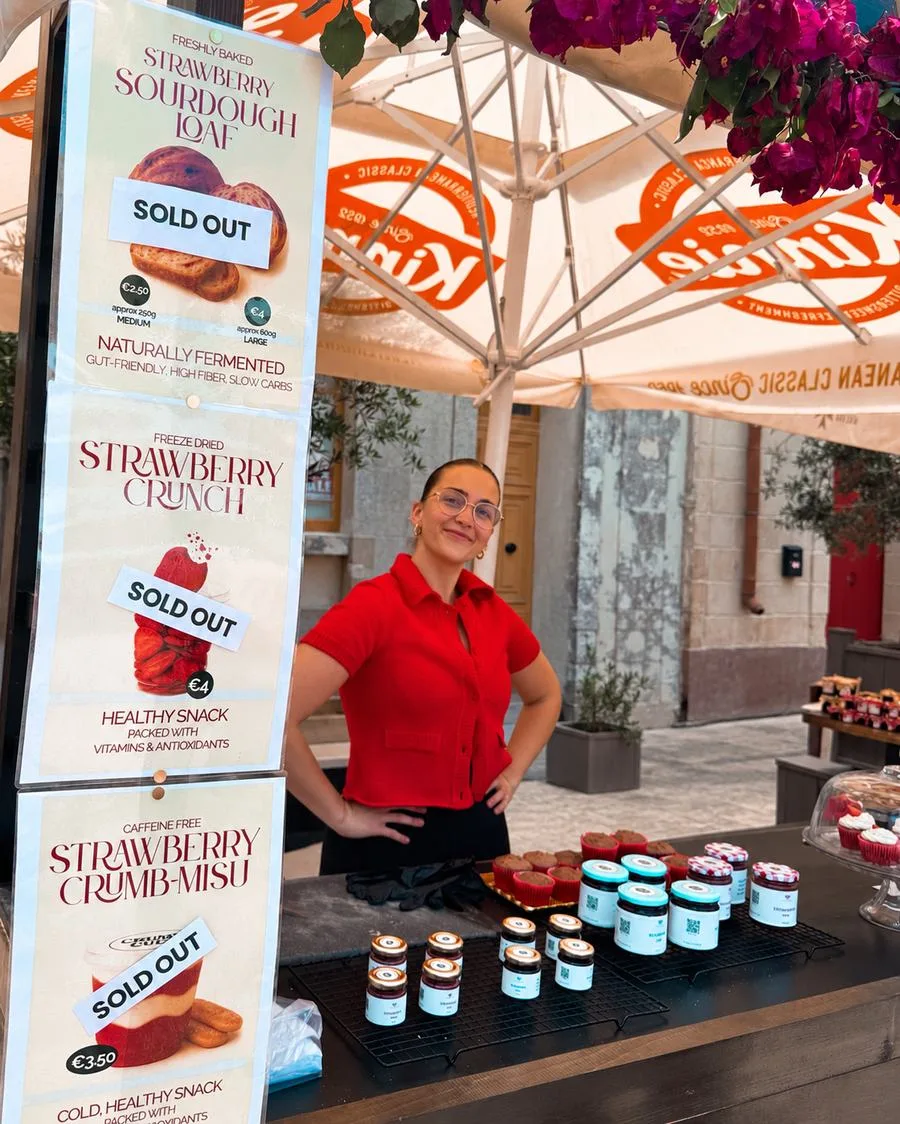
Hi, I'm Laura. I bake for a living, and I'm a scientist by profession.
I'm Austrian, now living in Malta, and I'm the founder of Crumb Cult, a sourdough micro bakery built on a love of fermentation, nutrition science, and the quiet magic of turning flour and water into something extraordinary.
In the past year I've sold thousands of sourdough bakes, supplied established cafés and restaurants, and watched my market stall sell out again and again. My background is science: I hold a BSc (Hons) in Applied Food and Nutritional Sciences and I'm a clinical nutritionist, and fermentation is the part of food I find most fascinating.
This guide is everything I wish someone had told me at the start. It's not about fancy equipment or chef skills. It's about understanding what the dough is doing, so every loaf you bake teaches you something.
— Laura
You don't need more recipes. You need to understand the dough.
Most beginners quit sourdough after a few attempts, and it's rarely their fault. The advice online contradicts itself, and nobody explains what's actually happening in the bowl.
Laura teaches you to read the signs, not the clock. Once you know why each step exists, you can fix any loaf yourself.
Everything inside the guide
17 short, illustrated chapters. Read it once front to back, then keep it open on the counter while you bake.
A digital guide with chapter navigation, charts and diagrams. It opens in any browser, on any device, so there's nothing to install.
The basicsWhat sourdough really is, and why it's good for you
- What is sourdough? The 6,000-year-old process, and the four things that make it work
- Nutritional value Glycaemic index, fibre and mineral absorption, explained by a nutritionist
Your starterBuild it from scratch in 5–7 days, then keep it alive
- Day-by-day starter build Flour, water, a jar, and exactly what to expect each day
- The 1:1:1 feeding rule Plus when to switch to 1:2:2 or 1:5:5 for deeper flavour
- Three readiness tests Visual, smell and float, so you never bake with a weak starter
- Storage decision guide Daily baker, weekly baker, going away, or pausing for months
- Troubleshooting table Hooch, acetone smell, no rise, and how to tell mould from normal
Let's bakeYour first loaf, from equipment to oven
- Basic equipment What actually matters, and what you can skip
- The first recipe Laura's forgiving classic white loaf, measured in grams
- Understanding the process The why behind autolyse, bulk, stretch-and-fold and cold proof
- Two-day timeline Hands-on time of about 30 minutes; the rest is waiting
- Shaping, cold proofing and the poke test How to build tension for a tall loaf
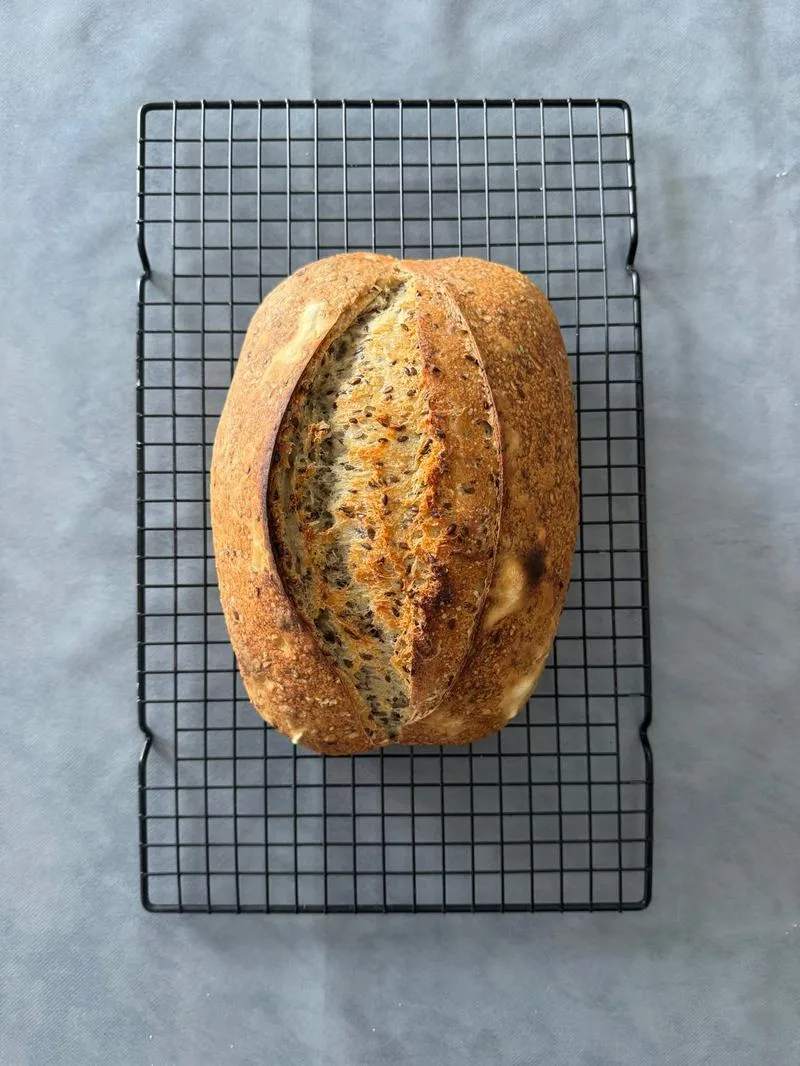
- Scoring The single score for a dramatic ear, and the cross score
- Baking Dutch oven temperatures, timings and the 96–98°C internal check
Finishing upKeep it fresh and fix what went wrong
- Storing, slicing and freezing Plus the trick to revive a stale loaf in 10 minutes
- Common beginner mistakes And a crumb troubleshooting guide: flat, dense, gummy, pale, too sour
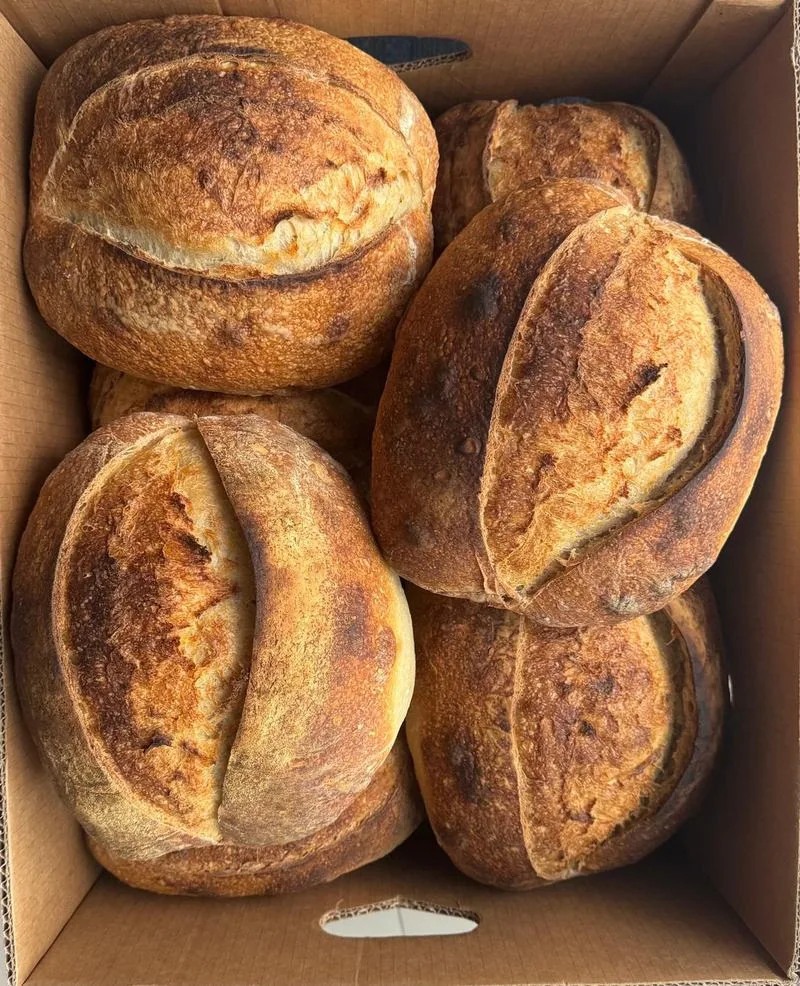
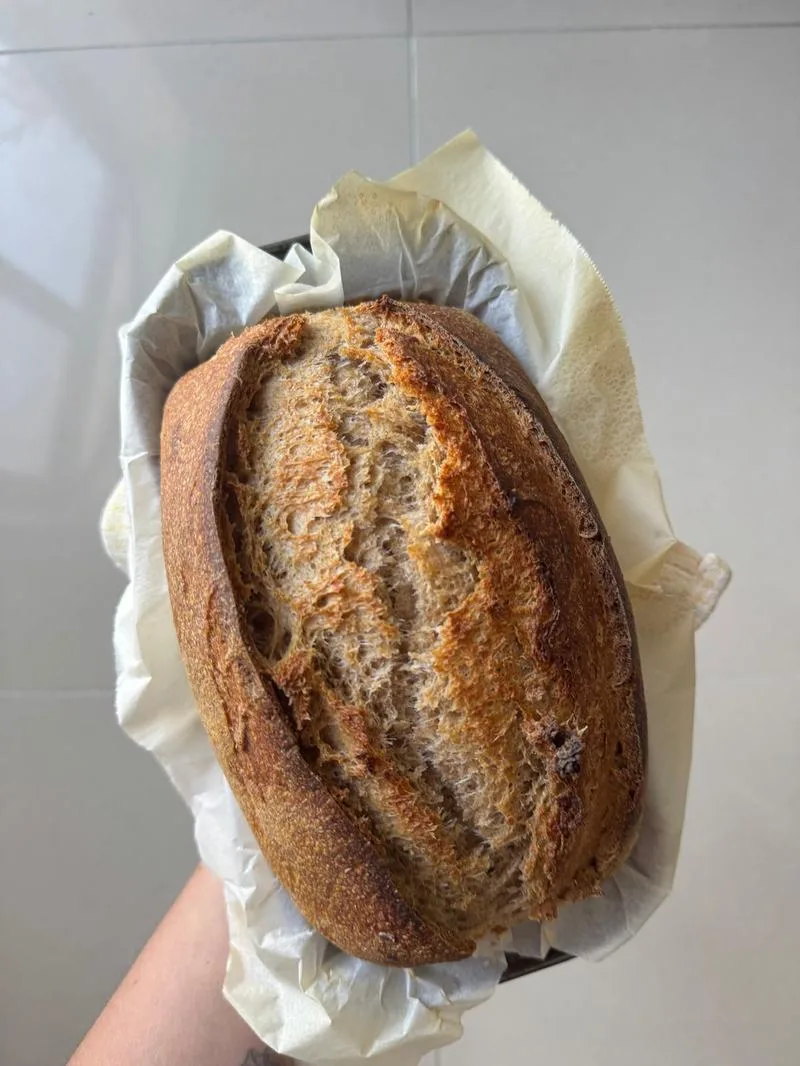
Your first loaf: one large, ~1kg sourdough
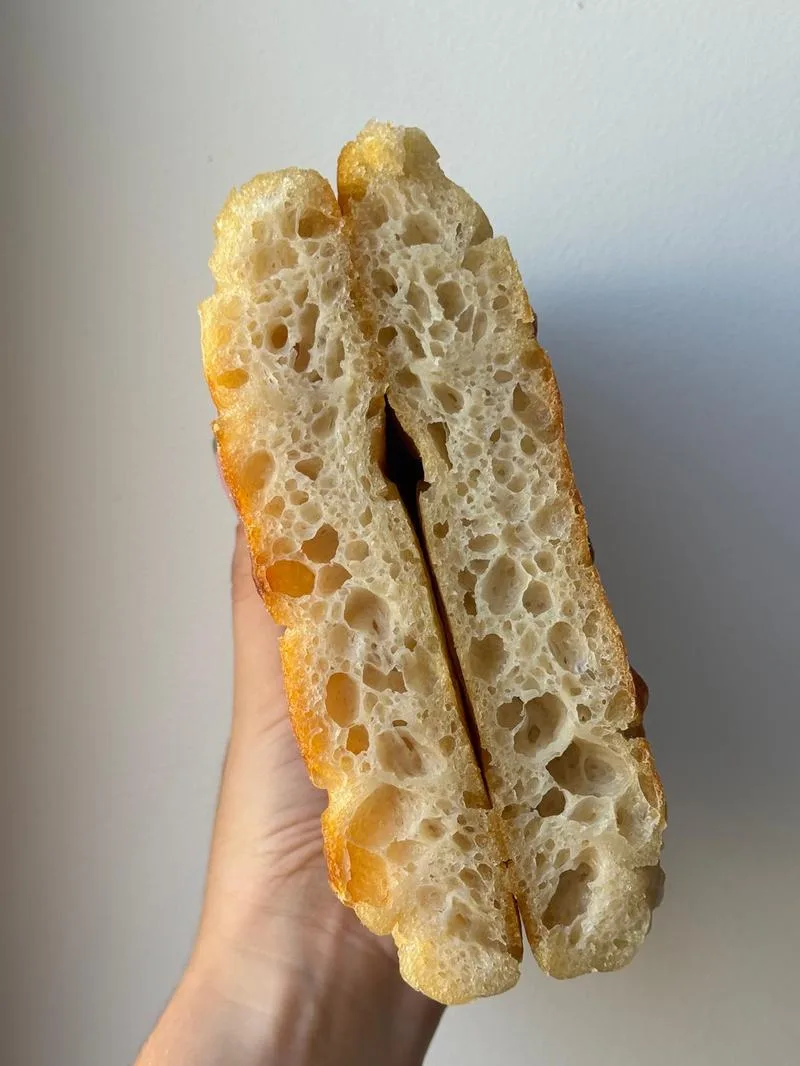
Four ingredients, a 72% hydration dough that's easy to handle, and a method designed to forgive beginner mistakes.


Is this guide for you?
Yes, if you…
- Have never made sourdough, or tried and gave up
- Want bread without commercial yeast or preservatives
- Like knowing why something works, not just what to do
- Care about gut health, fibre and steadier energy
- Have a regular home oven and a kitchen scale
Probably not, if you…
- Already bake high-hydration or enriched sourdough confidently
- Need gluten-free bread; this guide uses wheat flour
- Want bread today; good sourdough takes a couple of days
Bake your own, for about the price of three loaves
A large loaf at Laura's stall is €4. The guide costs about the same as three, and teaches you to bake every loaf after that.
By Laura Gerbasich
Food Scientist & Clinical Nutritionist
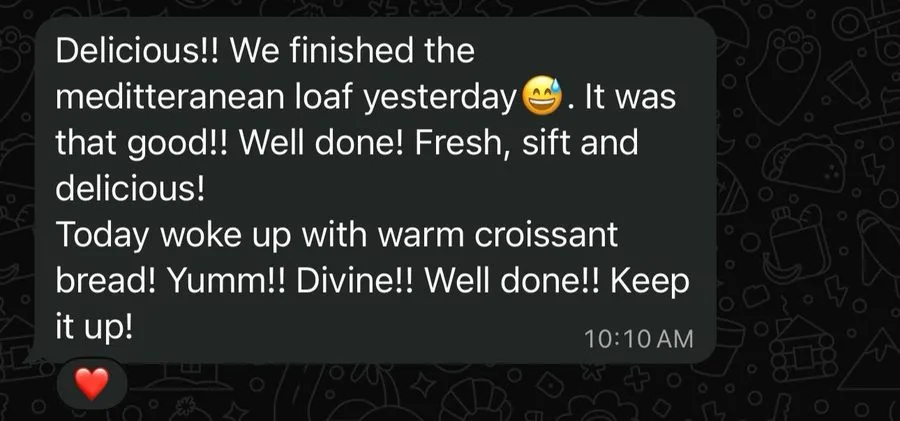
“Fantastic as always.”A regular customer
The Beginner's Guide to Sourdough Baking
- 17 illustrated chapters from first starter to finished loaf
- Day-by-day starter build with readiness tests and a storage guide
- Laura's first-loaf recipe with a full two-day timeline
- Troubleshooting tables for starter problems and crumb problems
- The science, simply explained by a food scientist and nutritionist
- Instant access on phone, tablet or laptop
No subscription. Yours to keep and come back to.
Get instant access €12.99Secure checkout. Your guide arrives by email straight after payment.
guarantee
Bake with it for 30 days, risk-free
Follow the guide. If you don't feel it helped you bake better bread, email us within 30 days and you'll get a full refund. No questions asked.
Questions before you start
I've never baked bread. Is this too advanced?
No. It's written for complete beginners. The first recipe is a forgiving 72% hydration loaf, and every step comes with the visual cues to look for, so you're never guessing.
Do I need a sourdough starter already?
No. Chapter 3 shows you how to make one from flour and water in 5–7 days, with exactly what to expect each day.
What equipment do I need?
A digital kitchen scale, a glass jar, a large bowl and an oven. A Dutch oven and a proofing basket give the best results, and the guide explains what to use if you don't have them yet.
How do I get the guide?
Straight after payment you'll receive access by email. It opens in any web browser on your phone, tablet or computer, with chapter navigation, so you can follow along in the kitchen.
I live somewhere hot, like Malta. Will it still work?
Yes. Warm kitchens ferment faster, which is exactly why the guide teaches you to read the dough rather than follow fixed times. Laura bakes in Malta every day.
Is sourdough gluten-free?
No. Long fermentation breaks down some gluten, and many people find sourdough easier to digest, but it isn't safe for people with coeliac disease.
Are measurements in grams or cups?
Grams. Weighing is far more accurate than cups, and it's one of the simplest ways to get consistent loaves.
Your first loaf is two days away.
Start your starter tonight with Laura's guide.
Get the guide €12.99